
7 Leveraged Income Streams to Build Without Quitting Your Job
Want real financial security in 2026? Here are 7 leveraged income streams busy professionals can build using AI, automation, and existing skills — no burnout required.
The Problem With Trading Time For Money
Sunday nights have a way of telling the truth. That quiet dread creeping in before the week restarts isn’t weakness — it’s your instincts flagging a structural problem. A single income tied to a single employer means a single point of failure. One restructuring email. One slow quarter. One new manager. And everything you’ve built financially is suddenly in question.
The standard advice — “get a raise,” “pick up freelance gigs,” “start a side hustle” — misses the point entirely. More hustle without more leverage just means more exhaustion. What actually changes your financial position is building streams that generate income without requiring proportional time in return.
That’s the core idea behind income stacking: layering systems — not jobs — so that your earning capacity grows even when your working hours don’t.
🎬 Watch the full video walkthrough on YouTube → Multiple Income Streams Without Quitting Your Job
What Is An Income Stack?
An income stack is a deliberate combination of income sources designed around three principles:
- Leverage — work you do once that continues paying over time
- Automation — platforms, tools, or systems that handle fulfillment and distribution
- Compounding — small, consistent streams that grow into something significant
The goal isn’t to build all seven streams simultaneously. The practical approach is to establish one stream until it generates a reliable $200/month, then layer the next. Over 12–18 months, what started as one experiment becomes a resilient financial system.
Here are seven streams that fit this model this year.
1. The Digital Template Economy
Create it once. Let it sell indefinitely.
Every time someone buys a physical product, there’s a chain of events: manufacturing, warehousing, shipping, returns. Every time someone buys a digital template, none of that happens. The file exists. The transaction processes. The creator earns — whether they’re awake or not.
This is the fundamental appeal of the digital product model, and in 2026 the barrier to entry has dropped to nearly zero thanks to AI-assisted creation tools.
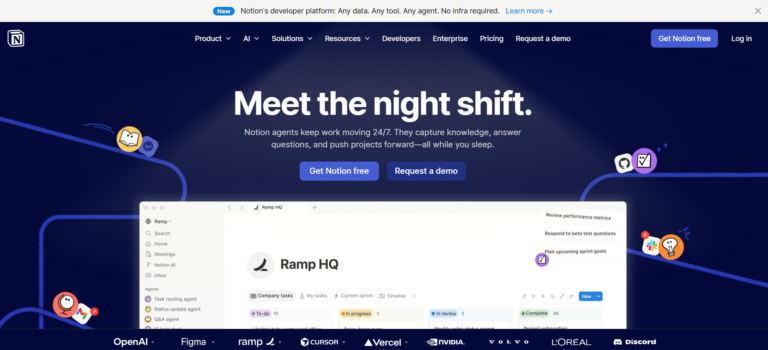
A scenario worth considering: A graphic designer keeps fielding the same question from small business clients — “How do you track your projects?” Instead of repeating the answer indefinitely, she spends one Saturday building a Notion client management system: automated invoice reminders, project timelines, communication logs. She lists it on Gumroad for $29. Over six months, without any additional effort, it generates over $4,000.
The insight here is counterintuitive: the best-selling templates don’t solve impressive problems. They solve tedious ones. Meal prep trackers, wedding budget planners, freelance rate calculators, content calendars — these consistently outperform “revolutionary” ideas because they address real, recurring frustrations people are already searching for.
In 2026, AI compresses the creation timeline dramatically. ChatGPT can generate spreadsheet logic and formulas. Notion AI structures databases. Gamma produces presentation templates in minutes. A product that used to take a week to build now takes a weekend.
🔗 Tools to start with:
- Gumroad — Zero upfront cost to list; built-in affiliate program so others can sell your product for you
- Notion AI — Template and database builder with AI assist
- Gamma — AI-powered presentation and doc template creation
Worth it? ✅ Yes — particularly for anyone with a repeatable professional workflow others ask about. The combination of zero marginal cost per sale, Gumroad’s native affiliate system, and AI-accelerated creation makes this one of the highest-leverage entry points in 2026. Validate your idea by searching the problem on Reddit or Google before building.
2. The Permissionless Pitch
Skip the proposal. Lead with proof.
Freelance marketplaces are crowded by design. Platforms built on competitive bidding naturally compress prices toward the lowest sustainable rate. Competing there means accepting that race.
There’s a different approach — one that sidesteps the competition entirely by reframing how you make first contact.
The method: Identify a business or creator doing work you genuinely respect. Study what they’re producing. Then complete a piece of high-quality work without being asked — and send it as your introduction, not your pitch.
A practical example: You notice a YouTube creator with a strong content library but thumbnails that aren’t converting. You don’t send a proposal. You don’t ask permission. You take their last three videos, redesign the thumbnails using Canva or Photoshop, and send a short email: “Your content deserves better first impressions. I rebuilt these three for free. If they perform the way I expect, here’s what I charge for ongoing work.”
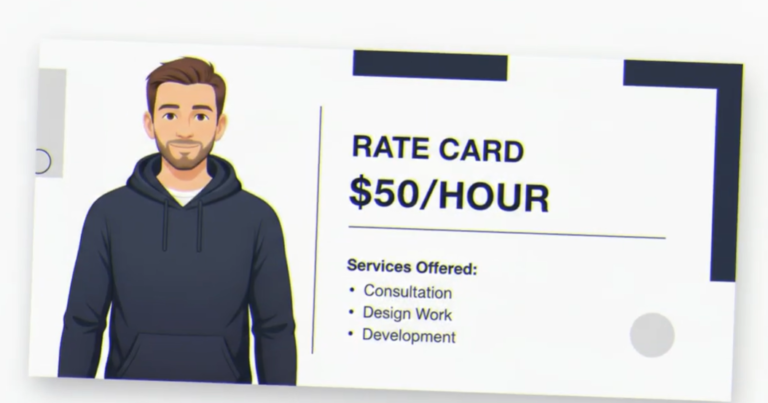
This approach works because it neutralizes the most common objection before the conversation starts: risk. The prospect doesn’t have to imagine what your work might look like. They can see exactly what you’d do with their actual content.
The skills with the highest conversion rate for this method:
- Sales page and landing page design (directly tied to revenue)
- Email sequence copywriting (measurable open and click rates)
- Ad creative editing (conversion-driven, not just aesthetic)
The 2026 context: AI tools handle the mechanical execution of most creative tasks. What businesses will increasingly pay for is strategic judgment — someone who knows why a particular headline converts, why a specific visual hierarchy works, why a given CTA fails. That layer of taste and context isn’t replicable by automation yet.
Worth it? ✅ Yes — especially as a fast-track path to your first $1,000+/month. No platform fees, no downward pricing pressure, and every successful project becomes portfolio evidence for the next. The cold reach-out feels uncomfortable once. The payoff is disproportionate.
3. The Human-In-The-Loop Role
The job category AI is creating — not eliminating.
Headlines about AI and employment tend toward a single, alarming narrative: automation is eliminating jobs. What gets less coverage is the parallel story — automation is also generating entirely new categories of work, most of which pay well precisely because the market hasn’t figured out how to commoditize them yet.

Two high-demand examples from 2026:
Short-form content strategist. Video teams are producing more content than ever, and raw footage is piling up faster than editors can process it. What they lack isn’t editing capacity — it’s someone who can watch 45 minutes of footage and flag: “The moment at 12:34 — that’s the clip. The silence before the punchline is what makes it land.” That pattern recognition for virality requires cultural fluency, comedic timing, and audience intuition. Those aren’t skills you can prompt into a language model.
Brand safety reviewer. Large advertisers are terrified of their campaigns appearing alongside inappropriate content. Programmatic ad placement generates combinations no algorithm can fully evaluate for cultural fit — a children’s snack brand appearing mid-roll in a true crime documentary isn’t a technical failure. It’s a judgment failure. Humans catch what AI misses.
Current pay range: $50–$150/hour for both roles. The premium exists because demand is new and companies are still building internal benchmarks for what these roles should cost.
Worth it? ✅ High value, especially for those with content, media, or marketing backgrounds. The entry window is narrow — once companies systematize these roles, compensation will normalize. Getting in now means you help define what the job is worth.
4. Micro-Niche Affiliate Content
Trust, compounded over time, beats SEO every time.
Affiliate marketing has a reputation problem — mostly earned by a decade of thin review sites, keyword-stuffed listicles, and undisclosed sponsored content. That version of affiliate marketing is largely dead.
What replaced it is harder to fake and more durable: trust built through short-form video in a specific, narrow niche.

The model in practice: Choose a category you have genuine experience with — home espresso equipment, baby sleep products, ergonomic home office setups, budget travel hacks. Start posting 30-60 second honest reviews: what works, what doesn’t, what’s overpriced for what it delivers. You’re not selling. You’re informing.
The affiliate link lives in your bio or pinned comment. When someone watches 15 of your videos and decides you’re not trying to manipulate them, they click your link because they trust you — not because you optimized your anchor text.
The compounding math:
- 1 video → 500 views → ~$3 in commissions
- 200 videos posted over time → passive portfolio generating $500–$800/month
- Old content keeps surfacing in searches and recommendations indefinitely
🔗 Affiliate networks worth joining:
- Turo Affiliate Program — Commissions on peer-to-peer car rental bookings via CJ Affiliate
- Gumroad Affiliate System — Promote other creators’ digital products
Amazon Associates, Impact.com, ShareASale for broad product categories
Worth it? ✅ Yes — with a realistic timeline. The first 60–90 days feel completely thankless. Month four and beyond start to feel like a system. The key variable is consistency in a narrow enough niche that the algorithm knows exactly who to show your content to.
5. Idle Asset Monetization
The income stream hiding in your garage.
Most households contain thousands of dollars of underutilized equipment: cameras used a few times a year, vehicles sitting in driveways for most of the week, tools bought for one project and never touched again, storage space that holds old furniture “just in case.” These items depreciate while occupying space. Peer-to-peer rental platforms convert them into income-generating assets.
A grounded example: A DSLR camera listed on a peer-to-peer rental platform sits idle for months. Then engagement season arrives. Amateur photographers need professional equipment for one weekend. At $75–$100 per rental, three or four bookings during peak season generates $1,200–$1,500 from equipment that would otherwise continue depreciating in a closet. The platform handles liability insurance. The owner exchanges the item and collects payment.
Other assets people consistently overlook:
- A driveway or parking space near a downtown core or transit hub → $150–$250/month on parking apps
- Camping gear, paddleboards, ski equipment → seasonal rental demand
- Extra square footage or garage space → listed on Neighbor for storage rental
🔗 Platforms to explore:
- Turo — Hosts typically retain 75–85% of each trip price
- Neighbor — Storage space rental marketplace
- Hygglo — General equipment and tool rental
Worth it? ✅ Immediately — and uniquely so, because it requires neither content creation nor client management. The psychological benefit is underrated: it doesn’t feel like a job. You’re simply making better use of what you already own. Start with the single highest-value item in your home you haven’t touched in six months.
6. Remote Appointment Setting
The high-income skill hiding in plain sight.
There’s an entire category of business operator — coaches, consultants, online educators — selling premium programs ranging from $5,000 to $50,000. These operators generate leads through content, but they consistently bottleneck at one point: getting qualified prospects onto a sales call.
That gap is what remote appointment setters fill.
What the role actually involves: You’re the first human contact between a warm lead and the sales conversation. You engage via direct message or email, ask a short sequence of qualifying questions — “What’s the primary challenge you’re working through right now? What kind of support have you tried before?” — and book prospects who fit the profile into the operator’s calendar. You’re not closing. You’re filtering and scheduling.
Why it pays $3,000–$7,000/month: A single qualified call can result in a $15,000–$50,000 sale. You’re not a line-item expense. You’re a direct driver of the pipeline. Business owners who understand this math pay accordingly.
What the role requires:
- Genuine warmth and curiosity in written communication
- Basic CRM familiarity (GoHighLevel, HubSpot — learnable in a weekend)
- Consistent follow-up discipline
How to land your first role: Reach out directly to coaches in a niche you understand — business, fitness, parenting, relationships. Offer to manage their inbound DMs for two weeks without charge, in exchange for a testimonial. Once you have documented results, charge accordingly.
Worth it? ✅ Arguably the fastest path to $3,000+/month for someone with no technical background. In a landscape where AI fluency and coding get all the attention, genuine human communication is quietly becoming a premium skill. The market for people who can represent a brand with warmth and precision is growing, not shrinking.
7. The Dividend Safety Floor
Build the boring foundation first.
Every high-earning month on the exciting income streams will eventually be followed by a slow one. A client pauses. A content algorithm changes. A rental sits vacant. Without a base of unconditional income, those slow months create panic — and panic leads to bad decisions.
Dividend-paying index funds and government bonds exist to prevent exactly that scenario. They require no active management, no client relationships, no content creation. Capital goes in. Income comes out on a schedule.
Why this matters psychologically: Financial safety isn’t just about the number in your account. It’s about the decisions you don’t have to make from a place of desperation. A reliable $300–$500/month from investments gives you permission to turn down a bad client, experiment with a new income idea, or let a slow month pass without existential anxiety. That psychological buffer is what enables risk-taking on the other six streams.
The math at scale:
- $100,000 invested in a 4% dividend yield = $4,000/year (~$333/month)
- Not transformational — but enough to cover a recurring expense permanently
🔗 Funds worth researching (not financial advice):
- SCHD (Schwab U.S. Dividend Equity ETF) — consistently recognized for yield and quality screening
- VYM (Vanguard High Dividend Yield ETF) — low cost, broad diversification
- XDIV — top-rated Canadian dividend ETF; 3.78% yield, 0.11% MER
Worth it? ✅ Always — start with $50/month if that’s where you are. The goal of this stream isn’t to get wealthy. It’s to build a financial floor stable enough that everything above it can take risks. Boring is the point.
Results — What the Stack Looks Like in Practice
Income Stream | Time to First Income | Realistic Monthly Range | Ongoing Effort |
Digital Templates | 2–4 weeks | $200 – $5,000+ | Minimal after launch |
Permissionless B2B | 1–2 weeks | $1,000 – $5,000 | Active initially |
Human-in-the-Loop | 2–4 weeks | $2,000 – $8,000 | Part-time |
Affiliate Content | 3–6 months | $300 – $2,000+ | Compounds over time |
Idle Asset Rental | 1–3 days | $100 – $1,500 | Very low |
Appointment Setting | 1–3 weeks | $3,000 – $7,000 | Active/consistent |
Dividends | Years | $100 – $500+ | Zero |
Verdict — Is This Realistic For A Busy Person In 2026?
Yes — but only if the approach is sequential, not simultaneous. Trying to build all seven at once is how people end up building none of them.
Pick one based on what you already have:
- A skill others ask about? → Digital Templates or Permissionless B2B
- Strong communication instincts? → Remote Appointment Setting
- Unused high-value gear? → Idle Asset Rental
- A specific niche you know deeply? → Micro-Niche Affiliate Content
- Savings sitting in a bank account doing nothing? → Dividends
Establish it. Stabilize it. Then layer the next one.
Financial independence doesn’t come from one breakthrough income source. It comes from assembling enough consistent streams that no single one — including your job — can threaten the whole structure. That’s optionality. That’s what you’re building toward.
Frequently Asked Questions
How many income streams can I realistically build while working full-time?
Start with one. Trying to build multiple streams simultaneously almost always results in zero making meaningful progress. Commit to one until it generates at least $200/month, then expand.
Do I need startup capital to build these income streams?
Most don’t require upfront investment. Digital templates, B2B services, affiliate content, and appointment setting all have near-zero startup costs. Idle asset rental requires owning something worth renting. Dividends require existing savings.
How long before an income stack replaces a portion of my salary?
Realistically, 12–24 months of consistent effort across two to three streams can generate $1,500–$3,000/month in supplemental income. Timeline depends heavily on which streams you choose and how consistently you execute.
Is affiliate marketing actually worth starting in 2026?
The SEO-driven blog model has largely declined in effectiveness. Short-form video affiliate content built around a specific niche and genuine trust remains highly viable — it’s just slower to build than most people expect.
What’s the single fastest stream to generate income?
Idle asset rental (list something you own today on Turo or Neighbor) and remote appointment setting (land your first role within weeks) both generate income faster than any content-based strategy.
Start This Weekend
Choose one stream. Take one concrete action before Sunday ends. Not research. Not planning. One action.
→ Subscribe to Income Stack Lab for weekly breakdowns on AI tools, automation systems, and practical wealth-building strategies built for people with real schedules and real constraints.
This post may contain affiliate links — we only recommend tools we’ve tested or would genuinely use ourselves.
Start Your Income Stack Today
📝 Download the free Income Stack Starter Checklist — the PDF helps you choose one realistic income stack and take your first step this week. No overwhelm. No guessing. Just a clear action plan.
Stop searching, start building. Get ready to take the FREE 5-Day Digital Product Challenge. This challenge helps you move past the “I need to figure out hosting first” barrier and actually create something valuable.
🎯 Want the best insights delivered straight to your inbox, subscribe to our weekly newsletter — no spam, just weekly actionable strategies to help you grow your income stack.
Want more? Here is where to find us:
If this resonated with you, come join the community across all our platforms. Subscribe to our YouTube channel ‘The Income Stack Lab’ for weekly videos on AI tools, automation workflows, and income experiments. Follow us on X, Instagram, TikTok, LinkedIn and Facebook for bite-sized tips, behind-the-scenes updates, and daily inspiration to keep building.
Enjoying the content? Buy me a coffee— fuel the lab, keep the ideas flowing.
Your future self will thank you for starting today. Happy Stacking!