
Budgeting Apps for Couples: 4 Proven Picks to End Fights
⏱️ Estimated Reading Time: 9 minutes
Are you searching for the best budgeting apps for couples? Compare Honeydue, YNAB, and Monarch Money, then start budgeting sooner!
Money fights rarely start with money. They start with confusion — one partner assumes the mortgage got paid, the other assumes the credit card got covered, and a Saturday turns tense before either of you says a word. If that sounds familiar, you’re not failing at finances. You just haven’t tried the right budgeting apps for couples yet.
The best budgeting apps for couples don’t force you to merge every account or hold a weekly budget meeting nobody wants. They give you shared visibility into bills, balances, and goals, so conversations shift from blame toward teamwork. This guide breaks down which app fits how you and your partner handle money.
Heads up: This post contains affiliate links. If you buy through them, we may earn a small commission at no extra cost to you — it helps keep ISL going. We only recommend tools we’d genuinely use ourselves.
The Real Problem With Money and Couples
Most couples don’t actually have a spreadsheet problem. They have a communication problem that tracking alone can’t fix. One partner assumes the money is handled, the other has no visibility, and the gap between those two assumptions is where most money arguments actually start.
One partner tracks every expense mentally, the other has no idea what’s sitting in the joint account, and by the time the statement arrives, it feels like an ambush instead of a normal Tuesday. The old-school fix — “let’s just talk about money more” — sounds reasonable until you remember neither of you wants a budget meeting after a 10-hour workday.
The deeper issue is transparency and teamwork, not tracking. Without a shared, trusted source of truth, every money conversation risks turning into a negotiation, or worse, an accusation. That’s exactly the gap a good app is built to close.
“The couples who stop fighting about money usually aren’t the ones who earn more. They’re the ones who stopped guessing what the other person was thinking.”

Why Budgeting Apps for Couples Matter More Than Ever
Shared finance tools have expanded quickly, and competition among budgeting apps for couples is now sharper than it was even a couple of years ago. That shift matters because purpose-built options now exist for nearly every money style, so there’s less reason to settle for a mismatched, one-size-fits-all app.
A few years ago, most budgeting apps were built for a single user, and couples simply shared a login — messy, and honestly a privacy risk. Now purpose-built platforms let you keep some money separate, share the rest, and still see the full picture together. There’s also a real generational shift: more couples are choosing partially combined finances instead of one joint account, so the old “just get a joint account” advice doesn’t hold up the way it used to.
Which Money Style Fits Your Relationship?
Before picking an app, figure out which money style you actually practice — fully combined, partially combined, or fully separate — rather than the one you feel like you’re supposed to have. That single decision narrows the entire search down to just a couple of realistic options.
The table below breaks down the three common setups and which apps tend to fit each one.
Money Style | What It Looks Like | Apps That Fit |
Fully combined | Everything in joint accounts, one shared budget | Monarch Money, YNAB |
Partially combined | Separate accounts, shared bills and goals | Honeydue, Quicken Simplifi |
Fully separate | Splitting shared costs like rent or groceries | Goodbudget, GoodShare, WeBudget |
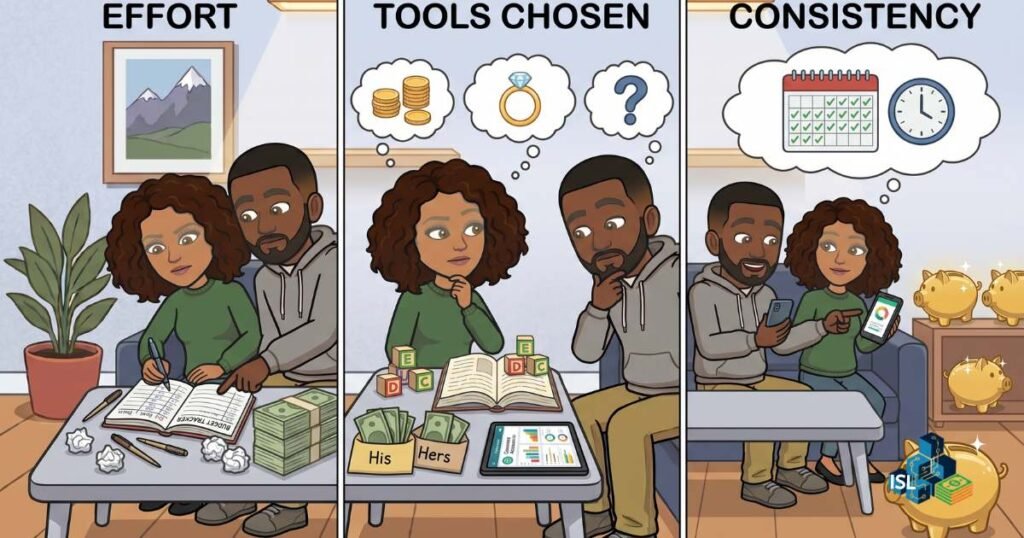
Fully Combined Finances
This setup works when you and your partner are comfortable merging everything into one pool. It’s the simplest to manage day-to-day, but it requires a high level of trust and shared visibility from the start.
Partially Combined Finances
Here you keep individual accounts but share specific bills, categories, or goals. It’s the most common setup for couples who value independence alongside teamwork.
Fully Separate With Expense Splitting
You track who owes what for shared costs — rent, groceries, utilities — without merging your financial lives. Expense-splitting apps exist specifically for this arrangement.
Start this week. Take one action.
Download the free Income Stack Starter Checklist — the PDF helps you choose one realistic income stack and take your first step this week. No overwhelm. No guessing. Just a clear action plan.
The Best Budgeting Apps for Couples, Compared
Each of these tools solves a slightly different version of the same problem, so the “best” one depends entirely on your setup. Honeydue, Simplifi, YNAB, and Monarch Money each target a different combination of budget style, price point, and how much structure a couple actually wants.
Honeydue: The Free Starting Point
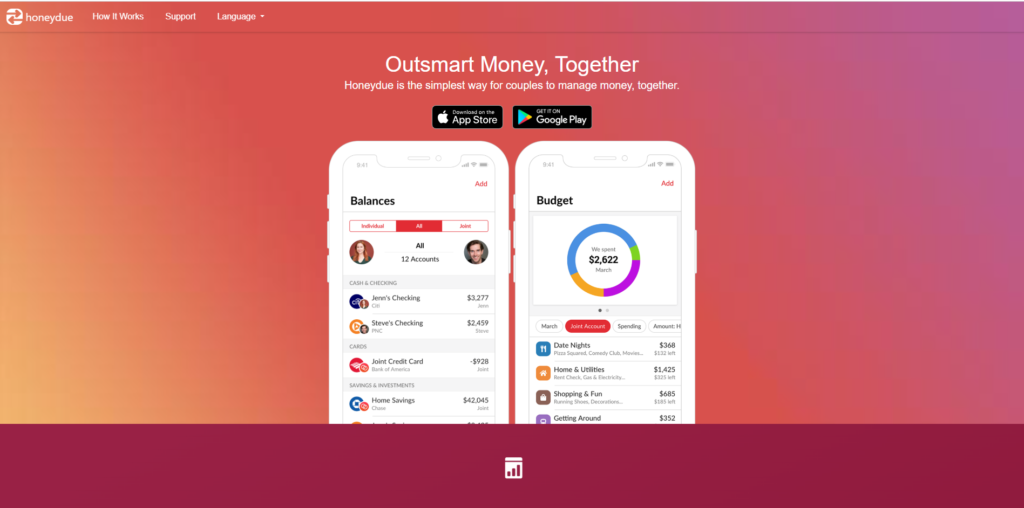
Honeydue is built from the ground up for couples, not retrofitted from a solo finance app. Its core features are free, which makes it a low-risk place to start.
Both partners connect accounts, choose what to share, and get a live view of balances and bills. A standout feature lets you comment directly on transactions, so a confusing charge becomes a quick tap instead of a dinner-table interrogation. The trade-off: it’s light on investment tracking compared to paid tools.
Quicken Simplifi: Automated and Affordable
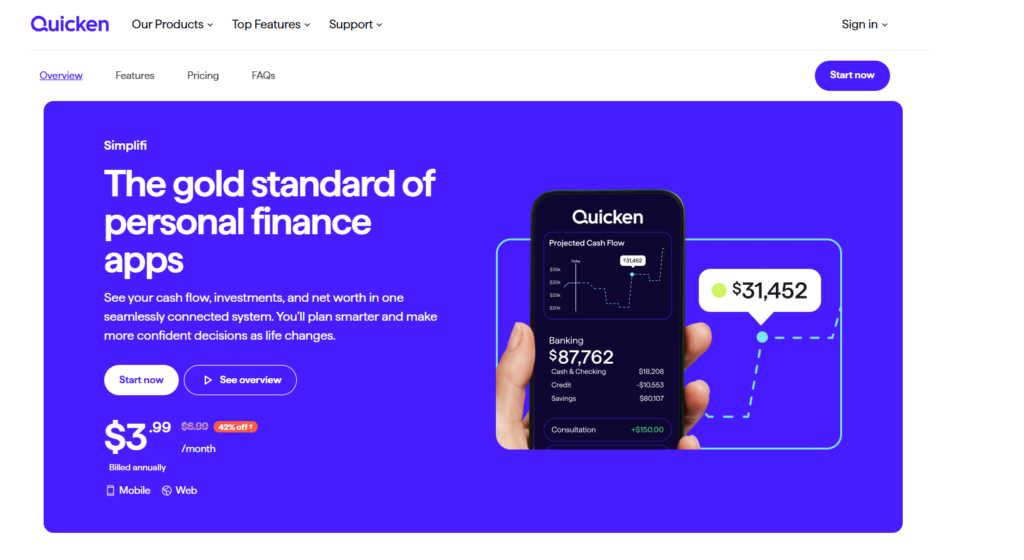
Quicken Simplifi is built around a running “Spending Plan” that projects income, subtracts bills and savings, and tells you what’s actually left to spend. Its Watchlists feature lets couples create shared trackers for categories like dining out, so both partners get constant visibility without a manual check-in.
Pricing has hovered around $71.88 per year billed annually, though promotional rates and current pricing change often, so confirm on Quicken’s site before committing. The main downside is the annual-only commitment.
YNAB: Structure for Serious Couples
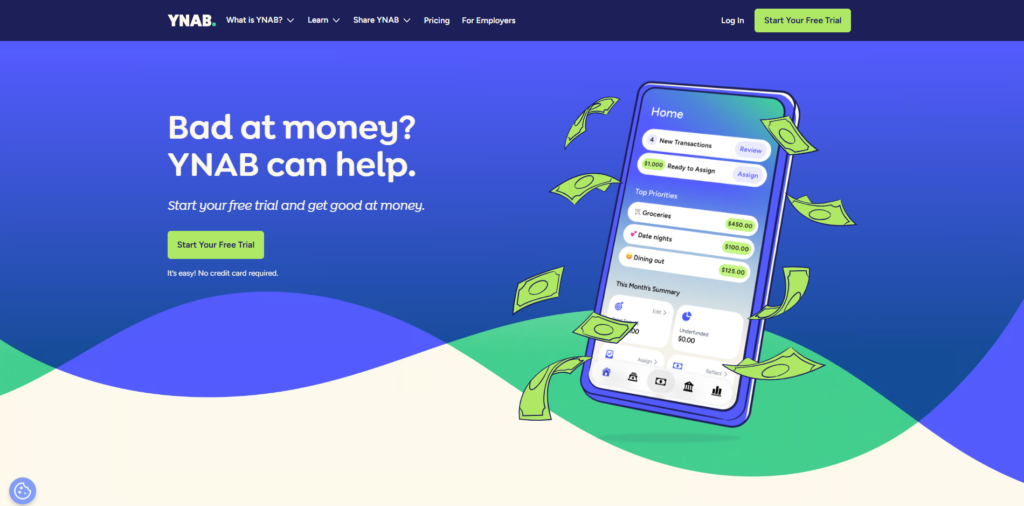
YNAB, short for You Need A Budget, is less an app and more a method. It runs on zero-based budgeting: every dollar of income gets assigned a job before the month begins.
YNAB Together allows one subscription to cover multiple household members with separate logins, and updates sync in real time as either partner spends. The learning curve is real, especially around credit cards, and this isn’t a “set it and forget it” tool. Plans run roughly $14.99 monthly or about $109 annually, with a free trial — check current terms on their site.
Monarch Money: The All-In-One Dashboard
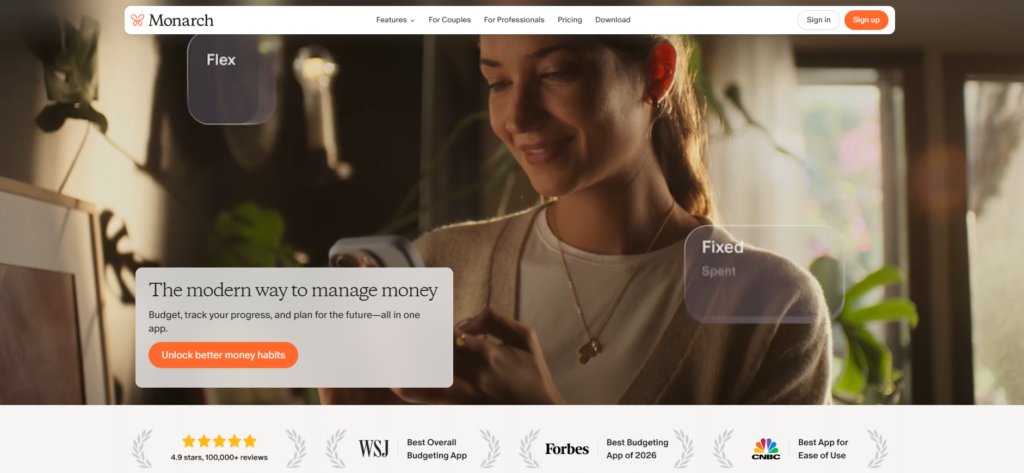
Monarch Money connects checking, savings, credit cards, loans, and investment accounts into one real-time dashboard. Its Household feature gives both partners full, equal access under a single subscription — no “primary” user, just shared visibility into the same budgets and goals.
The trade-off is price and a learning curve, since the sheer number of features can overwhelm a first-time user. Plans have run around $14.99 monthly or roughly $99.99 annually, with a free trial typically available; confirm current pricing directly with Monarch.
Other Options Worth a Look
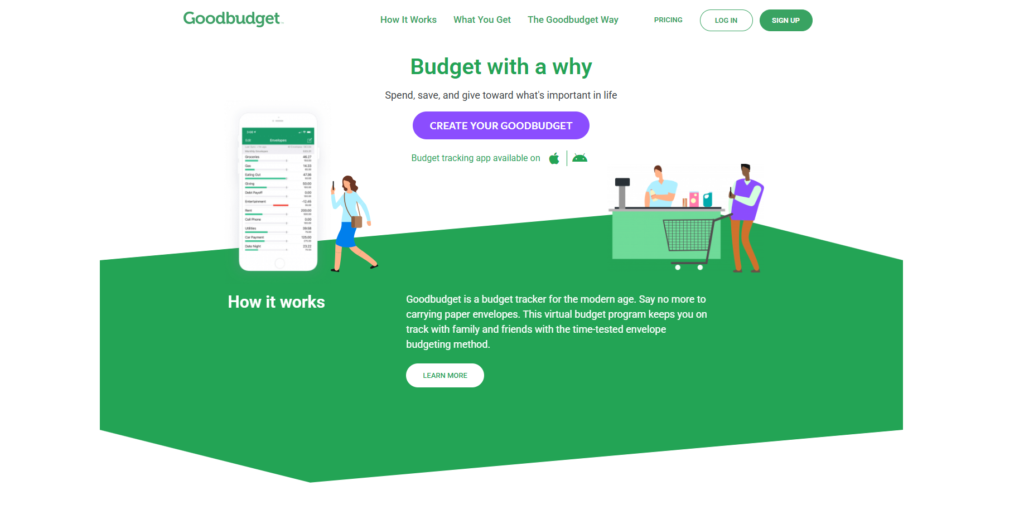
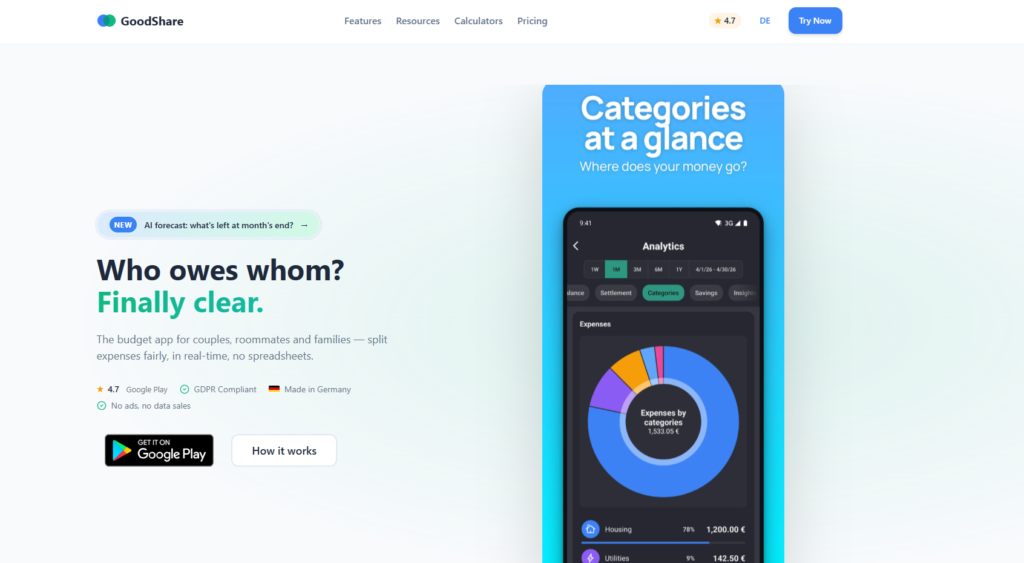
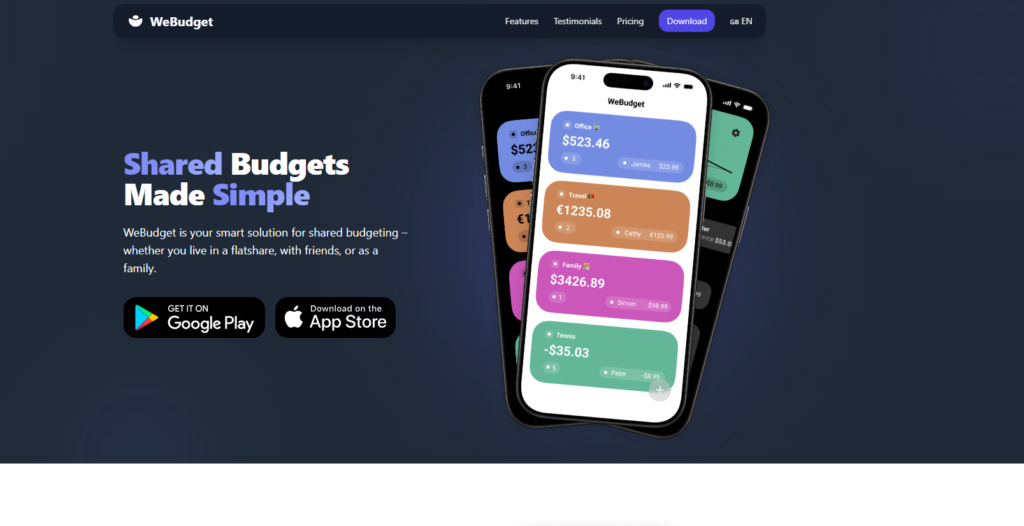
Goodbudget digitizes the classic envelope system, giving both partners shared envelopes for groceries, entertainment, or savings with a real-time view of what’s left. GoodShare and WeBudget focus specifically on splitting shared costs like rent and utilities, with GoodShare’s AI receipt scanner cutting down on manual entry for couples who keep finances mostly separate.
A Quick Case Study: Two Incomes, One Dashboard
Consider a couple earning a combined income in the mid-five-figure range, each with separate checking accounts and one shared joint account reserved for bills. They tried a shared spreadsheet for four months and eventually abandoned it after missing two separate bill due dates.
Switching to a partially combined setup with Honeydue for shared bills, while keeping personal spending private, cut their monthly “money talk” from an hour of back-and-forth to about ten minutes. The shift wasn’t the app itself — it was finally matching the tool to how they actually managed money, rather than how they assumed they should.
Common Mistakes Couples Make With These Apps
Even with a solid app, plenty of couples still end up frustrated within a few months. A few patterns show up again and again, and most of them have nothing to do with which specific app a couple chose in the first place:
- Choosing an app for the “ideal” money style instead of the one you actually live, like picking a fully-combined tool when your finances are really separate
- Setting categories once and never revisiting them, so the app feels outdated within weeks
- Using the app to track blame instead of patterns, which turns a helpful tool into a new source of tension
- Skipping privacy settings entirely, which matters most in partially combined setups where some personal spending should stay private
How to Actually Stick With a Budgeting App as a Couple
The habit that quietly wrecks most setups is checking the app alone instead of together. When only one partner monitors it, a power imbalance can form — one person becomes the “money manager,” the other becomes the person being managed.
A simple fix: a five-minute shared check-in once a week, using whichever app you picked, so both partners stay equally informed instead of one person carrying all the mental math. Couples who review shared finances on a regular basis report fewer money-related conflicts than those who check in only when problems arise.

FREE 5-Day Challenge
Build Momentum Without the Tech Overwhelm
If you want a structured way to move forward, I’ve put together a free 5-Day Challenge: Build a Sellable Digital Product in 5 days. It focuses on simple, actionable steps without overwhelming tech.
This challenge helps you move past the “I need to figure out hosting first” barrier and actually create something valuable.
Frequently Asked Questions
What are the best budgeting apps for couples right now?
Honeydue, Quicken Simplifi, YNAB, and Monarch Money are among the most commonly recommended options for couples, each fitting a different money style. The right pick depends on whether you’re fully combined, partially combined, or keeping finances separate.
Are these budgeting apps free to use?
Some, like Honeydue and Goodbudget’s basic tier, offer solid free features. Others, like YNAB and Monarch Money, are paid subscriptions with free trials, so it’s worth testing before committing annually.
Which app is best for couples who keep finances separate?
GoodShare and WeBudget are built specifically for splitting shared costs like rent and groceries without merging accounts. Goodbudget’s envelope system also works well for couples who prefer a visual, simple structure.
Do we have to combine our bank accounts to use these apps?
No. Most modern apps, including Honeydue and Quicken Simplifi, let you keep accounts fully separate while sharing visibility into specific bills or categories. You control exactly what your partner can see.
How long does it take to set up a shared budgeting app?
Initial setup typically takes 20 to 40 minutes per person, mostly for connecting accounts and choosing sharing permissions. Ongoing maintenance is usually a few minutes a week if both partners check in together.
What's the biggest mistake couples make when choosing an app?
Picking an app that matches an “ideal” money style rather than the one the couple actually practices. This mismatch is the most common reason couples abandon a new app within the first month.
Is This Worth It?
For most couples arguing about money more than they’d like, switching to one of these tools is a reasonable, low-risk experiment. The apps themselves won’t fix a communication problem, but they remove a lot of the guesswork that fuels one.
Expect an adjustment period of a few weeks as you both get used to checking in together. The tools that stick are the ones that match how you actually handle money, not the setup you think you’re supposed to have. If you’re willing to run a short trial and have one honest conversation about your money style first, the time investment is small compared to the friction it can remove.
⚠️ Affiliate Disclosure: This post contains affiliate links to tools we have tested or would genuinely use ourselves. If you sign up through our links, we may earn a small commission at no extra cost to you.
Start Your Income Stack Today
📝 Download the free Income Stack Starter Checklist — the PDF helps you choose one realistic income stack and take your first step this week. No overwhelm. No guessing. Just a clear action plan.
Stop searching, start building. Get ready to take the FREE 5-Day Digital Product Challenge. This challenge helps you move past the “I need to figure out hosting first” barrier and actually create something valuable.
🎯 Want the best insights delivered straight to your inbox, subscribe to our weekly newsletter — no spam, just weekly actionable strategies to help you grow your income stack.
Want more? Here is where to find us:
If this resonated with you, come join the community across all our platforms. Subscribe to our YouTube channel ‘The Income Stack Lab’ for weekly videos on AI tools, automation workflows, and income experiments. Follow us on X, Instagram, TikTok, LinkedIn and Facebook for bite-sized tips, behind-the-scenes updates, and daily inspiration to keep building.
Enjoying the content? Buy me a coffee— fuel the lab, keep the ideas flowing.
Your future self will thank you for starting today. Happy Stacking!