
Income Stack For Parents: 3 Proven Layers to Real Freedom
⏱️ Estimated Reading Time: 9 minutes
Discover the income stack system—3 layered income layers for busy parents that fit real schedules, become lower-maintenance over time — and grow real financial breathing room. Start today.
It’s 9:47 p.m. The kids are finally asleep, the dishes are half-done, and you’re scrolling through “side hustle ideas” on your phone for the third night this week. Every article says the same thing: “Just find an hour a day.” But you tried that. You signed up for a survey site, did a few gigs, and ended up more drained than before — with almost nothing to show for it.
Here’s the truth: the problem was never your effort. It’s the model. Most side hustle advice assumes unlimited time and energy — not the reality of parenting. An income stack for parents works differently. It’s three layers that build on each other, fit around your actual schedule, and gradually become more low-maintenance income as they mature. This post breaks down exactly how that works.
Why Most Side Hustle Advice Fails Busy Parents
Most “side hustle” guides hand you a single strategy and expect it to fix everything overnight. For parents juggling jobs, kids, and exhaustion, that approach almost always collapses within weeks.
The core issue is sequencing. Survey sites, content mills, and random gig apps trade your most exhausted hours for the least amount of money. They’re not strategies — they’re time-drains disguised as opportunity.
What actually works is a side hustle for busy parents built in layers, not a single all-or-nothing bet. Each layer has a different job:
Layer | Role | Time Investment | Payoff Speed |
Layer 1: Service | Cash foundation | High early, decreases over time | Fastest |
Layer 2: Content | Trust + audience builder | Moderate, ongoing | Medium |
Layer 3: Digital Products | Leverage + scale | Front-loaded, then lighter | Slowest, but compounds |
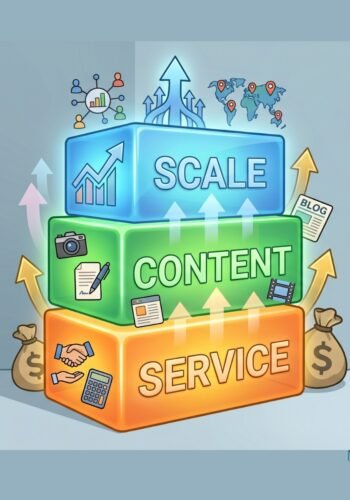
“I stopped chasing quick wins and started building a system — a stack of income layers that work together and compound over time.”
That’s the philosophy behind an income stack for parents: service, content, scale — each one funding and fueling the next.
Layer 1: Build Your Cash Foundation With a Service
Start with a service, because it’s the fastest way to generate income without waiting months for traction on a blog or audience-based strategy.
Blogging and affiliate marketing are real strategies — but they’re slow-burn. If you’re short on time and need results sooner, a service-based offer is your starting point. You likely already have productized services hiding in your existing skill set.
You don’t need a big audience, a course, or new credentials. You need a clear offer and a few people who need help. Results still depend on consistency and how well your offer matches a real need — there’s no shortcut around that.
What Services Can You Realistically Offer?
Some practical starting points for a side income for parents:
- AI-assisted writing or content support
- Simple social media management
- Inbox cleanup or admin support
- Research summaries for busy professionals
- Canva design or presentation work
- Bookkeeping or spreadsheet organization
- Workflow setup for small businesses
To find your offer, ask two questions: What skills from your current or past job do other businesses need? And what problems do you already solve for friends, family, or yourself on a regular basis?
If you’re the family’s de facto trip planner, that’s a coordination service. If your work emails get results, that’s copywriting. If you build clean spreadsheets without thinking twice, that’s bookkeeping support.
Finding Your First Clients Without a Website
You don’t need a polished website to start. Your first clients just need to know you exist.
Start with your warm network. A simple message works: “I’m now offering [Skill] for small businesses — know anyone who needs help with [Specific Problem]?”
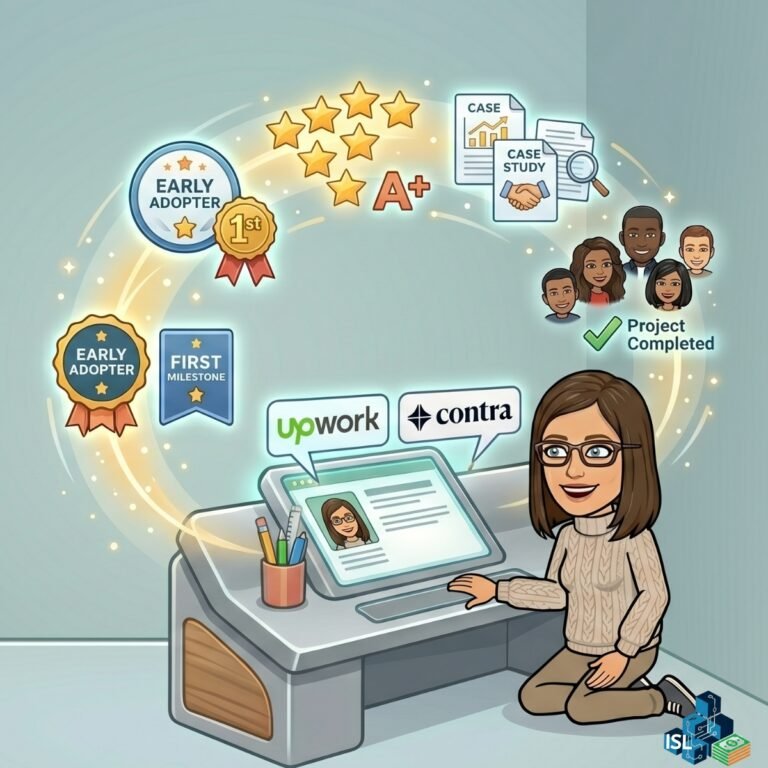
From there, platforms like Upwork or Contra can help you land your first few projects — not as a permanent home base, but as a way to build testimonials and case studies while getting paid.
Productize It: The Upgrade Move
Once you’ve delivered a service a few times, package it into a repeatable offer. Instead of custom work each time, build one clear bundle — a monthly content package, a recurring admin plan, a standard setup service.
This single shift reduces decision fatigue for you and makes delivery far more predictable. It’s the most hands-on layer, but it’s the foundation everything else stands on.
Layer 2: Turn Your Work Into a Content Engine
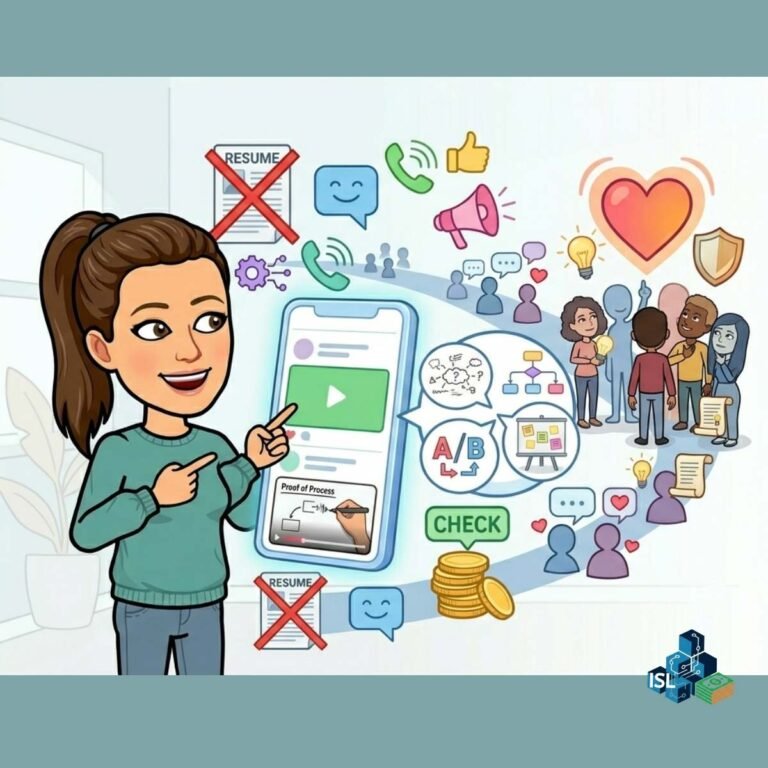
Here’s the direct answer: once your service brings in steady income, content shifts you from chasing clients to having clients find you — building credibility passively, even during school pickup or bedtime.
This is where income layers system thinking starts to compound. Your service work becomes the raw material for your content, so you’re never starting from a blank page.
What Content Actually Looks Like for a Busy Parent
This doesn’t mean launching a high-production YouTube channel or writing 3,000-word posts weekly. Pick one platform and one format that matches how you naturally communicate.
If You’re… | Try This Format |
A writer | Weekly or biweekly email newsletter |
Visual | Instagram or Pinterest showcasing your work |
A thinker/expert | Short LinkedIn posts on common problems |
Comfortable on camera | YouTube or short-form video |
The Golden Rule: Document, Don't Create
You’re already doing the work — your content is a byproduct, not a separate project. Finished a client project? Write a short case study. Did a client ask a great question? Turn the answer into a post.
This removes the “what do I talk about?” pressure entirely. Your content engine runs on what you’re already doing.
Mini case study
One ISL reader who does bookkeeping for small businesses started posting one LinkedIn breakdown per week — things like “3 spreadsheet mistakes that cost small businesses money.” Within a few months, she reported inbound client inquiries referencing specific posts, and was able to raise her rates slightly because prospects already understood her process before the first call. Results like this vary widely and aren’t guaranteed.
Building an Audience — and a Bonus Revenue Layer
Content does two things: it makes selling your service easier (clients see proof of your thinking, not just a resume), and over time it builds an audience — the bridge to Layer 3.
This is also where affiliate income can start. If you genuinely use a tool like YNAB for budgeting and recommend it to your audience, you may earn a commission when someone signs up. Treat it as a bonus layer, not a baseline — results depend heavily on audience size and engagement.
Layer 3: Package Your Expertise Into Digital Products
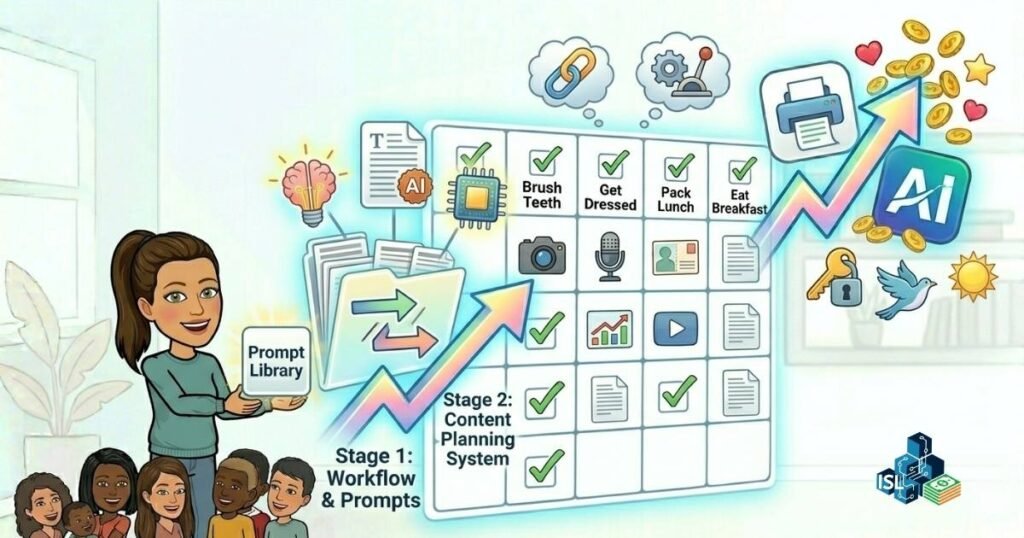
The direct answer first: digital products let you package your repeated advice and processes into something people can buy and use independently — helping more people at once without trading more hours.
This is the layer most associated with low-maintenance income, though it’s worth being honest: building and maintaining a product still takes real, ongoing effort.
From Service to Product: Real Examples
Your Service | Possible Digital Product | Typical Price Range |
Social media management | 30-Day Content Calendar Template for Realtors | $29–$50 |
Web copywriting | Website Copywriting Swipe File | $19–$39 |
Parent-focused coaching | Chaos-Free Morning Routine Kit (printable) | $19–$29 |
AI-assisted content work | Prompt library or workflow pack | $19–$49 |
How the Layers Reinforce Each Other
Your content drives traffic and trust. That leads to a free resource that captures emails. An automated sequence delivers value and introduces your paid product. Satisfied customers may move toward something bigger.
“A more grounded goal than full passive income is low-maintenance income — a system that needs occasional updates, but no longer requires you to manually fulfill every hour of work.”
Putting the Income Stack Together
Picture a parent in their 30s with limited hours and a full life. He starts with AI-assisted content support for two small businesses — that’s Layer 1, generating income immediately.
Next, he shares content around a problem he understands well — saving time, managing money as a parent, simplifying systems. That builds Layer 2’s audience and trust.
Eventually, he creates a small digital product — a checklist, template, or workflow pack — that helps people take action faster. That’s Layer 3.
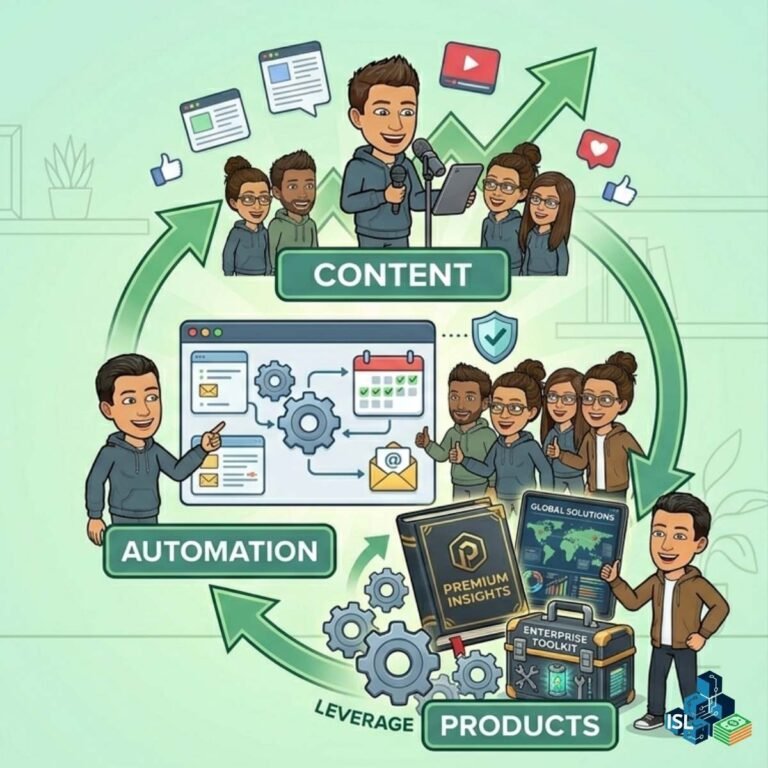
Three layers. One generates income as you build. One grows your audience. One creates leverage. Together, that’s the income stack for busy parents.
Three Mistakes That Derail the Stack
- Building all three layers at once — a fast path to burnout. Start with Layer 1, add Layer 2 once income flows, add Layer 3 once you have an audience worth selling to.
- Choosing a strategy that ignores your real schedule — if you have six hours a week, your plan needs to respect that.
- Waiting for the “perfect” system — the best stack is the one you can repeat consistently, not the most polished one.
Frequently Asked Questions
What is an income stack for parents?
An income stack for parents is a layered system — typically a service, a content engine, and a digital product — that builds income in stages rather than relying on one strategy. Each layer supports and feeds the next over time.
How long before the income stack generates real money?
Realistically, expect 3–6 months before a blog generates meaningful traffic, and 3–6 months, or may be more, before a YouTube channel reaches monetization eligibility. Digital products can generate income within days of launch if you have even a small existing audience. The key is starting one stream immediately and building from there.
How much time does building an income stack take per week?
It depends entirely on your schedule and goals, but many parents start with just a few hours per week focused on Layer 1. The system is designed to flex around real-life constraints, not the other way around.
Which layer should I start with first?
Start with Layer 1 — a service offer — since it’s the fastest way to generate income without waiting for an audience or product to gain traction. Layers 2 and 3 build on the stability this creates.
Can I really build a side income for parents without a big audience?
Yes — Layer 1 specifically doesn’t require an audience at all, just a clear offer and a few people who need help. Audience-building comes later, in Layer 2.
Is passive income realistic for busy parents?
True passive income is rare and often overstated. A more realistic target is low-maintenance income — a system that occasionally needs updates but doesn’t require constant hands-on work.
What's the difference between Layer 2 and Layer 3?
Layer 2 is about building trust and an audience through content, while Layer 3 turns your expertise into a product people can buy independently. Layer 2 typically funds the audience that Layer 3 sells to.
Do I need to be on social media to use this income layers system?
No — content can take many forms, including email newsletters or LinkedIn posts, depending on what fits your communication style. The goal is consistency in one format, not presence everywhere.
Is This Worth It?
Building an income stack for parents takes real time, especially in Layer 1, and there’s no way around that upfront effort. It won’t replace a full-time income quickly, and digital products in particular require ongoing maintenance, not a one-time setup. That said, the layered approach avoids the burnout common with single-strategy side hustles, because each layer has a defined, limited role. If you have a few consistent hours a week and a skill someone would pay for, this is a realistic starting point — not a guaranteed outcome, but a structure that compounds rather than resets each month.
⚠️ Affiliate Disclosure: This post contains affiliate links to tools we have tested or would genuinely use ourselves. If you sign up through our links, we may earn a small commission at no extra cost to you.
Start Your Income Stack Today
📝 Download the free Income Stack Starter Checklist — the PDF helps you choose one realistic income stack and take your first step this week. No overwhelm. No guessing. Just a clear action plan.
Stop searching, start building. Get ready to take the FREE 5-Day Digital Product Challenge. This challenge helps you move past the “I need to figure out hosting first” barrier and actually create something valuable.
🎯 Want the best insights delivered straight to your inbox, subscribe to our weekly newsletter — no spam, just weekly actionable strategies to help you grow your income stack.
Want more? Here is where to find us:
If this resonated with you, come join the community across all our platforms. Subscribe to our YouTube channel ‘The Income Stack Lab’ for weekly videos on AI tools, automation workflows, and income experiments. Follow us on X, Instagram, TikTok, LinkedIn and Facebook for bite-sized tips, behind-the-scenes updates, and daily inspiration to keep building.
Enjoying the content? Buy me a coffee— fuel the lab, keep the ideas flowing.
Your future self will thank you for starting today. Happy Stacking!