
Newsletter Side Hustle for Parents: Honest $500 Truth
⏱️ Estimated Reading Time: 7 minutes
Discover if a newsletter side hustle for parents can realistically hit $500/month with limited time. See the honest breakdown now!
Saturday morning, and your laptop is open for exactly four minutes before someone needs a snack, a bandaid, or simply your undivided attention. You close it, guilt creeping in, since a “real” business supposedly needs more than four-minute windows strung together. A newsletter side hustle for parents works differently. It’s built to survive exactly this kind of interrupted day.
You’ve probably seen the income claims online and wondered if any of it applies to your actual life. This isn’t about chasing a headline number. A newsletter side hustle for parents can realistically produce $500 a month, once you strip away the hype and look at the real mechanics behind it.
Heads up: This post contains affiliate links. If you buy through them, we may earn a small commission at no extra cost to you — it helps keep ISL going. We only recommend tools we’d genuinely use ourselves.
The Real Constraint Isn't Time — It's Fragmentation
Most side hustle advice quietly assumes you have an open evening. You don’t. You have fifteen minutes here, twenty there, usually after the kids are finally down.
That single mismatch explains why so many parents try freelancing, rideshare driving, or an Etsy shop and quit within weeks. Async income doesn’t ask you to be “on” — it asks you to show up in pieces.
Why Most Side Hustles Fail Parents From the Start
Freelance writing, tutoring, and driving apps all trade your time for money in rigid blocks. A client call doesn’t pause for a toddler meltdown. That rigidity is the actual problem, not your motivation or your work ethic.
A newsletter is one of the few content engine models built around asynchronous work. You brainstorm in the pickup line, draft during nap time, and schedule after bedtime. Miss a week, and nothing collapses.
Side Hustle | Requires Live Presence? | Startup Cost | Survives a Chaotic Week? |
Rideshare driving | Yes | Low | No |
Freelance writing (client work) | Often | Low | Rarely |
Etsy shop | Sometimes | Medium | Sometimes |
Newsletter | No | Very low | Yes |
Start this week. Take one action.
Download the free Income Stack Starter Checklist — the PDF helps you choose one realistic income stack and take your first step this week. No overwhelm. No guessing. Just a clear action plan.
Is a Newsletter Side Hustle for Parents Actually Different?
Yes, mainly because it’s batchable. You can write and schedule a month of issues in one focused sitting and let the system run while life happens around it.
That doesn’t mean it’s effortless. It means the effort can be compressed into fewer, more flexible sessions instead of daily obligations. For a parent stacking a first income layers system, that distinction matters more than almost anything else.
Your email list is also an owned asset. Unlike a social following, it isn’t rented from an algorithm that can change its rules overnight. That’s a meaningful piece of financial resilience for anyone building income outside a single paycheck.

How Newsletter Money Actually Works
There’s no single switch that turns a list into income. Revenue tends to arrive through a handful of overlapping paths, each with different timelines and different effort requirements.
Four Ways a Newsletter Side Hustle for Parents Can Pay
None of these are guaranteed, and none happen overnight. Here’s the realistic order most creators see results, roughly fastest to slowest:
- Affiliate links — recommending tools you already use, earning a commission on sign-ups or sales. Often the first small trickle of revenue.
- Your own digital product — a checklist, template, or short guide you sell directly. No external approval needed.
- Sponsorships — brands paying for space in your inbox, usually once you cross a few thousand engaged subscribers.
- Paid subscriptions — a monthly fee for premium content, which compounds slowly but can become the most stable stream.
Getting started costs almost nothing. Platforms like Beehiiv and Substack both offer free tiers that are more than enough for your first hundred subscribers.
Can’t decide which newsletter platform to choose? Read the full breakdown here to make the right decision based on your needs.
The 90-Day Framework for Building One From Nothing
A 90-day framework won’t guarantee $500 a month, but it gives your limited hours somewhere specific to go instead of scattering across a dozen half-finished ideas.

Month 1: Foundation (Target: 100 Subscribers)
Total time investment often lands around five to eight hours for the month, mostly batched on weekends.
- Pick a micro-niche you already live, not a broad category like “parenting.” Think “budget family meals for picky eaters” or “weekend activities for toddlers.”
- Set up a free Beehiiv or Substack account and publish a live landing page in under thirty minutes.
- Write one short, useful first issue readers can act on immediately.
- Personally invite thirty to fifty people who already trust you.
Month 2: Growth & Consistency (Target: 500 Subscribers)
Time commitment often drops slightly, closer to four to six hours for the month, because the setup work is behind you.
Establish a weekly cadence and batch two issues in a single sitting. Repurpose each issue into two or three social posts, and share genuinely useful pieces inside relevant Facebook groups instead of just plugging links.
Month 3: Monetization (Target: $500/Month, Not Guaranteed)
“It’s possible, but not immediate. Simple in concept, but not effortless. Flexible, but it still demands consistency.”
Once you’ve got a few hundred engaged readers, affiliate links and a small digital product tend to move faster than sponsorships or paid subscriptions, which usually need a larger, more established list.
Mini Case Study: A Realistic Numbers Breakdown
Consider a parent newsletter focused on toddler meal planning. By month three, the list sits at roughly 600 subscribers with a strong 45% open rate — solid for a niche list, though not unusual for a highly engaged one.
Illustrative math only, not a projection: recommending a $50 planning tool at a 10% commission, with twenty subscribers purchasing, produces $100. Layer in a $9 mini-guide sold to fifteen subscribers, and that’s another $135. Combined, that’s a realistic mid-range outcome for month three — below $500, but a credible foundation heading into month four.
This kind of blended approach, spreading revenue across affiliate links and a digital product rather than one channel, tends to be more resilient than betting everything on a single sponsor deal.
The Mistakes That Quietly Kill Momentum
A handful of habits derail progress more often than lack of time does:
- Writing for “everyone” instead of one specific reader, which makes the content forgettable
- Trying to grow the list and monetize simultaneously from day one
- Treating the newsletter like a personal journal instead of solving a recurring problem
- Going quiet for weeks after a strong start, which erodes trust faster than almost anything else
- Stacking every monetization method at once instead of mastering one first
What a One-Hour-a-Week Workflow Actually Looks Like

You don’t need a daily ritual for this to work. A Minimum Viable Progress approach spread across three short sessions is often enough.
A realistic weekly split looks something like this: fifteen minutes to jot one idea while out on a walk, thirty minutes for a rough draft during a quiet stretch, and fifteen minutes to edit and schedule before the week ends. That’s roughly an hour total, not a guarantee of results.
According to HubSpot, email consistently ranks among the highest-return marketing channels available to small creators, which is part of why a modest, consistent list can outperform a larger but neglected one.
Is $500 a Month Actually Realistic?
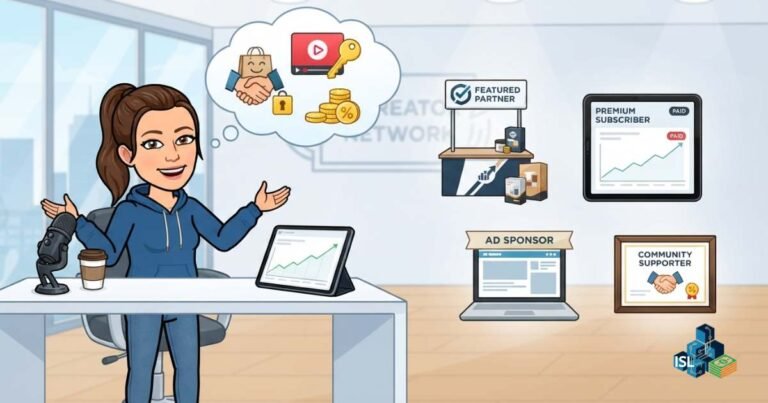
For some parents, yes — with real caveats attached. It typically requires several months, a genuinely specific niche, and a willingness to combine more than one monetization method rather than waiting on a single big payoff.
It isn’t instant, and there’s no version of this where consistency doesn’t matter. If you’re looking for guaranteed income on a fixed timeline, this isn’t that. If you’re looking for an asset you can build in fragments and own outright, it’s one of the more realistic options available.
FREE 5-Day Challenge
Build Momentum Without the Tech Overwhelm
If you want a structured way to move forward, I’ve put together a free 5-Day Challenge: Build a Sellable Digital Product in 5 days. It focuses on simple, actionable steps without overwhelming tech.
This challenge helps you move past the “I need to figure out hosting first” barrier and actually create something valuable.
Frequently Asked Questions
How much money can a newsletter side hustle for parents realistically make?
Results vary widely, but a few hundred engaged subscribers can plausibly produce somewhere in the range of $100 to $500 a month through affiliate links and a small digital product. There’s no guaranteed number, and most creators earn little to nothing in the first month or two.
How long does it take to reach 500 subscribers?
Most parents following a consistent, batched approach reach the 500-subscriber mark somewhere around month two or three. Growth depends heavily on niche specificity and how consistently you invite your existing network.
Is Beehiiv or Substack better for a parent-run newsletter?
Both offer solid free plans suitable for a first newsletter, and either is fine to start on. The better choice usually comes down to which built-in growth or monetization features matter most to your specific niche.
Do I need a large audience before I can monetize?
No. Affiliate links and a small digital product can start producing modest income with just a few hundred engaged subscribers, while sponsorships and paid subscriptions typically require a larger, more established list.
How much time does a parent newsletter side hustle actually require each week?
A realistic starting point is around one hour a week, split across short sessions for brainstorming, drafting, and editing. Monthly totals often run five to eight hours in the first month and less afterward.
What's the biggest mistake new newsletter creators make?
Trying to grow the list and monetize it at the same time from day one. Focusing first on a small, loyal audience around one specific problem tends to produce better long-term results.
Is income stacking the same as passive income?
Not exactly. Income stacking includes active streams (consulting, freelancing) alongside semi-passive ones (digital products, affiliate content). True passive income is one component of a stack — not the whole strategy.
What is the biggest risk of building multiple income streams?
Spreading yourself too thin before any stream has traction. The solution is to build sequentially, not simultaneously — one stream at a time, with real results before you add the next layer.
Is This Worth It?
A newsletter side hustle for parents isn’t a shortcut, and it won’t turn four-minute windows into meaningful income overnight. The time investment is real — expect several months of mostly unpaid effort before anything resembling $500 shows up.
That said, it’s one of the few models genuinely built around fragmented time rather than fighting against it. You own the list, you control the pace, and a missed week doesn’t undo the progress you’ve made. If you can accept a slow, uneven start, it’s a reasonable option worth testing.
⚠️ Affiliate Disclosure: This post contains affiliate links to tools we have tested or would genuinely use ourselves. If you sign up through our links, we may earn a small commission at no extra cost to you.
Start Your Income Stack Today
📝 Download the free Income Stack Starter Checklist — the PDF helps you choose one realistic income stack and take your first step this week. No overwhelm. No guessing. Just a clear action plan.
Stop searching, start building. Get ready to take the FREE 5-Day Digital Product Challenge. This challenge helps you move past the “I need to figure out hosting first” barrier and actually create something valuable.
🎯 Want the best insights delivered straight to your inbox, subscribe to our weekly newsletter — no spam, just weekly actionable strategies to help you grow your income stack.
Want more? Here is where to find us:
If this resonated with you, come join the community across all our platforms. Subscribe to our YouTube channel ‘The Income Stack Lab’ for weekly videos on AI tools, automation workflows, and income experiments. Follow us on X, Instagram, TikTok, LinkedIn and Facebook for bite-sized tips, behind-the-scenes updates, and daily inspiration to keep building.
Enjoying the content? Buy me a coffee— fuel the lab, keep the ideas flowing.
Your future self will thank you for starting today. Happy Stacking!